

Cookie Preferences

By clicking, you agree to store cookies on your device to enhance navigation, analyze usage, and support marketing.
More info.Thank you! Your submission has been received!
Oops! Something went wrong while submitting the form.



Even though I might not always be a hundred percent comfortable, I am a Veterinarian. I’ll be able to figure it out.

Disney cruises and summer camps don’t come cheap.
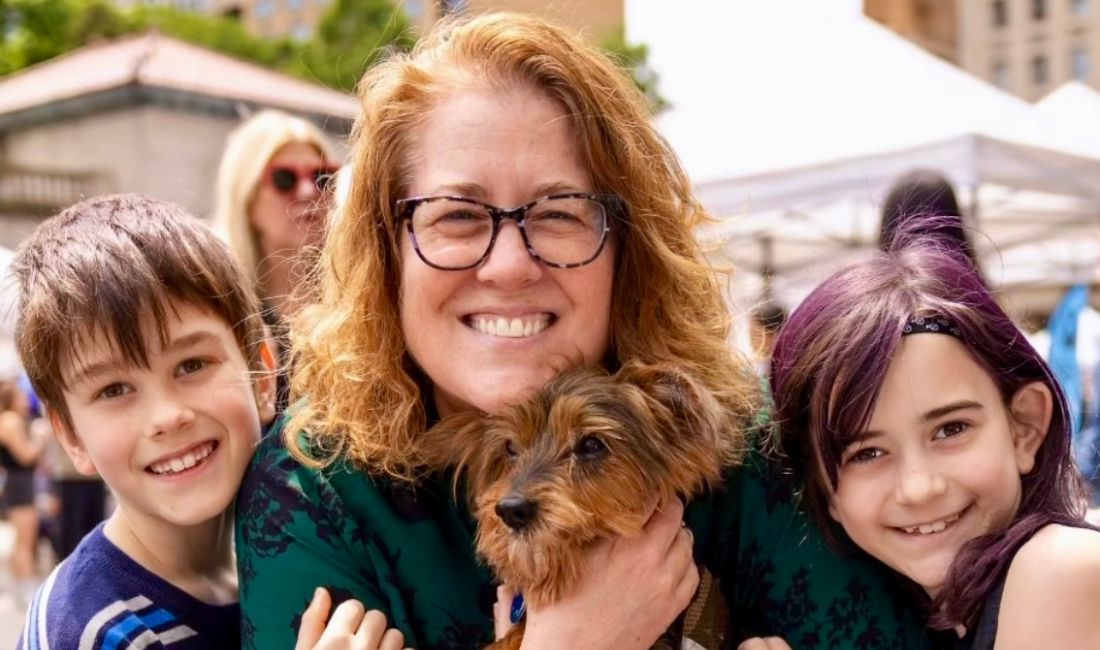
Dr. Martin is a proud single mother of nine-year-old twins in Manhattan. She works full-time in academia, where she specializes as a Laboratory Animal Veterinarian while also mentoring and training veterinary residents through the three-year residency program at Weil Cornell Medical College.
After hearing about Roo from one of her residents, the idea of working relief with Roo stuck with Dr. Martin. At the time, she was only interested in making some extra money to support her kids’ activities and family vacations and had no way of knowing the opportunities that relief would bring.
“I didn’t really consider how much I’d enjoy what I was doing. And now there are ways where I can retire and still earn on my own terms.”
If you’ve ever hesitated starting your relief journey and thought, “I don’t know if I’m ready,” Dr. Martin felt the exact same way. Before requesting her first relief shift, the what-ifs were nonstop. Would she pick up the record system fast enough? Would the staff be welcoming? She’d be leaving her usual neighborhood in Manhattan and taking the subway into an unfamiliar borough with nothing but Google Maps and a hope of being on time.
The anxiety wasn’t about whether she was a good Veterinarian, it was about everything else: new people, a new place, and the uncertainty of not knowing what to expect. But she kept coming back to what she tells her own residents on day one:
"You’re already a Veterinarian, and you can handle this. This is what you were trained to do."
So it was time to take her own advice.
What made the first step easier was how simple Roo made it to request a shift. The hospital details, shift time, and pay were all transparent before she committed, without even having to make a phone call.
“I just go on my phone and request the shift. I don’t have to talk to anyone. I don’t have to wait for someone to get back to me. Everything is all laid out there for you.”
She read through the Relief Tips on the Roo website, planned her route the night before, packed her supplies, and gave herself extra time for the commute. Small, practical steps that turned the unknown into something manageable.

Dr. Martin wisely chose a first shift at a multi-doctor hospital where Relief Vets were a normal part of the workflow. She introduced herself, the staff walked her through the system, and she started seeing patients. Once Dr. Martin started to meet the staff and integrate into the hospital, she had a realization:
“They don’t know it’s my first relief shift unless I tell them.”
And by the end of the day, she thought her first shift went much better than expected and was ready to try it again.
Dr. Martin knows the nerves are normal whenever you try new things and that most first-time Relief Vets will feel the same, even if they don’t show it. She stresses the importance of knowing what you’re comfortable with, and most importantly, having the confidence in yourself as a Veterinarian. Then, the rest will come naturally.
“Once you’re there, you’ll be so busy you won’t even think about the fact that you’re nervous. Your shift will be over before you know it.”
The teams she’s worked with have been overwhelmingly welcoming and collaborative. She’s figured out which hospitals match her style, how she’s enjoyed working alongside new colleagues to share and learn from one another, and which record systems she’s most comfortable with.
The connections she's made have been the biggest surprise. She’s met Vets and Techs who impress her with their knowledge and empathy, built relationships with pet patients and parents, and discovered that the people-side of veterinary medicine is actually one of the most fulfilling parts of relief work. All important life lessons that Dr. Martin continues to bring back to her residents.